
Notarizing Documents for an Elderly Parent: A Compassionate Guide for Adult Children and Caregivers

Nobody plans the moment they need a mobile notary for elderly parents. It finds you — usually in the middle of something else, and almost always too soon.
Maybe your father had a fall last week, and what used to feel like something you’d get around to eventually suddenly feels very urgent. Maybe your parent’s doctor just said something that made the future feel closer than it did before. Maybe it’s a Sunday afternoon and you’ve realized, with a jolt of quiet panic, that a power of attorney everyone talked about was never actually signed.
The last thing you need is to navigate a bureaucratic process alone, chase down a notary who doesn’t return calls, or ask a vulnerable parent to travel to an office.
After more than 24 years of serving families throughout Long Beach, and cities throughout Los Angeles County, and Orange County — in living rooms, hospital rooms, conference rooms, assisted living facilities, and hospice settings — I can tell you one thing with certainty: you don’t have to figure this out alone.
What a Mobile Notary Can Do for Your Family
A mobile notary comes to wherever your parent is. That’s the core of it. But in the context of elder care, it means much more than that.
When notarizing documents for an elderly parent, these are the most common documents families need:
• Durable Power of Attorney (financial)
• Advance Healthcare Directive
• Trust documents and amendments
• Deed transfers and real estate documents
• Affidavits and sworn statements
• Consent forms and legal agreements
These documents often need to be executed quickly — and correctly. An error in notarization can delay critical healthcare decisions, create legal complications in estate planning, or render an important document unenforceable.
We Come to You — Wherever That Is
One of the most important things to know: your parent does not need to travel anywhere. A mobile notary is fully equipped to perform legally valid notarizations in:
Private Homes
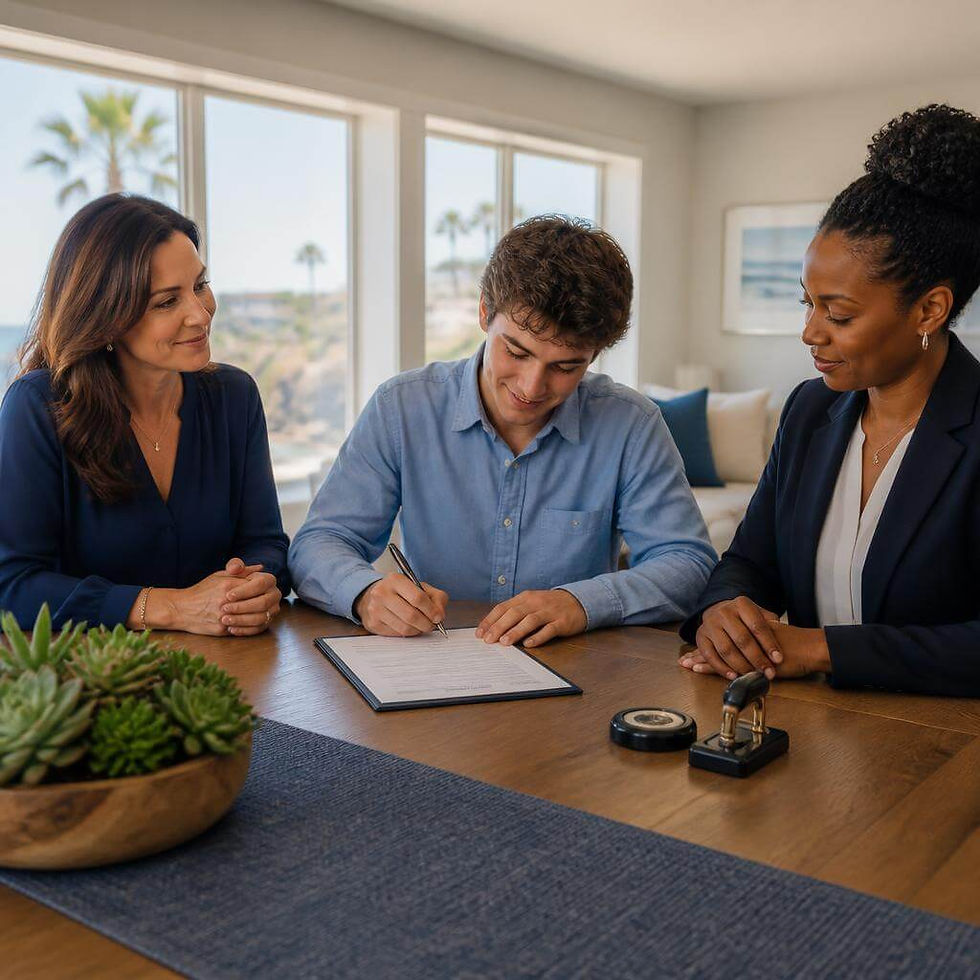
The most common setting. We come to your parent’s home at a time that works for them — including evenings and weekends when needed. This is familiar, comfortable, and private.
Hospitals and Medical Facilities
Hospital notarizations happen more often than most families expect. Whether a parent is recovering from surgery, receiving treatment, or in an acute care setting, a mobile notary can coordinate with the family and care team to find an appropriate time and quiet space for the signing.
Assisted Living Facilities
Most assisted living facilities welcome mobile notaries and have protocols in place for document signings. If your parent is a resident, simply let the facility know a notary will be visiting and ask about their preferred process for guest access.
Skilled Nursing Facilities and Rehabilitation Centers
Post-surgery or post-hospitalization stays are often when families realize urgent documents need to be executed. A mobile notary can typically visit during regular visiting hours with advance coordination.
Hospice Settings
These are among the most tender and time-sensitive signings. Hospice staff are generally experienced in coordinating visits from outside professionals, and a compassionate, unhurried notary can make this process as peaceful as possible for your parent and your family.
What Sensitivity Looks Like in Practice
Not every notary is equipped — emotionally or professionally — to handle elder signings well. Here’s what you should expect from an experienced, compassionate mobile notary:
— Patience, always. Elderly clients may need more time to read, process, and understand what they’re signing. A good notary never rushes.
— Direct engagement with your parent. The notary’s job is to interact with the signer — not the adult children in the room. Your parent should be the center of the conversation.
— A calm, non-clinical presence. These appointments can be emotionally charged. An experienced notary brings steadiness and professionalism to the room without adding to the stress.
— Honest assessment. If there are concerns about a signer’s ability to understand and willingly execute the document, a responsible notary will address those concerns directly — not look the other way.
— Discretion. Family matters are private. What happens in that room stays there.
How to Prepare for Notarizing Documents for an Elderly Parent
A little preparation goes a long way toward making the signing smooth and successful:
• Have your parent’s current, government-issued photo ID ready
(driver’s license, state ID, or passport)
• Confirm the exact legal name on the documents matches the name on the ID
• Let the notary know in advance if your parent has any physical limitations
(difficulty gripping a pen, vision impairment, etc.)
• If the signing is at a facility, notify staff in advance and confirm visiting access
• Have a quiet, well-lit space available if possible
• If they become easily fatigued, schedule the appointment for their best time of day
What if there are concerns about my parent’s mental capacity? A notary is not a physician and cannot make a clinical determination of capacity. However, if there is any reason to doubt that a signer understands what they are signing or is acting voluntarily, the notary must refuse the notarization. If capacity is a concern, it is worth consulting with your parent's attorney or physician before scheduling an appointment. |
Frequently Asked Questions
Can a notary come to a hospital room?
Yes. Mobile notaries can visit patients in hospitals, provided the facility allows outside visitors (most do). It’s best to call the hospital’s patient services or social work department in advance to confirm the process and find a suitable time.
What if my parent can’t hold a pen or sign their name?
California law allows a signer to make a mark — typically an "X" — directly on the document in place of a full signature. Two witnesses must be present: one writes the signer's name beside the mark, and both sign as witnesses. The signer must make the mark themselves. An experienced notary will guide your family through this process correctly.
Does the whole family need to be present?
No. Only the signer needs to be present for the notarization itself. Family members may be in the room, but the notary will interact primarily with the signer. In some cases, it may actually be less stressful for the signer if the room is kept calm and quiet.
How much notice do you need?
Same-day and next-day appointments are often available, especially for urgent situations. Don’t hesitate to call even if you need something quickly — this is exactly the kind of situation mobile notary services are designed for.
Do you serve all of Long Beach, Los Angeles County, and Orange County?
Yes. I provide mobile notary services throughout Long Beach, the South Bay, Carson, Los Alamitos, Huntington Beach, and surrounding communities. If you’re unsure whether I serve your area, just ask.
You Don’t Have to Navigate This Alone
Over 24 years of sitting at kitchen tables, hospital bedsides, and assisted living common rooms has taught me one thing: families who call aren't looking for a transaction. They're looking for someone steady, experienced, and kind — someone who will show up, handle things correctly, and make a hard day a little easier.
That's what I'm here for.
One thing worth knowing before you wait: powers of attorney, healthcare directives, and estate documents must be signed while your parent still has legal capacity. If this is on your mind, now is the right time.
If you need a mobile notary for an elderly parent anywhere in the Long Beach, South Bay, or Orange County area — I'd be honored to help. Reach out anytime.
→ Learn more or schedule an appointment: NotaryLongBeach.com
ABOUT THE AUTHOR
Kimberly McKendell is the owner of Notary Long Beach – Mobile Notary & Apostille, offering mobile notary and apostille services throughout Long Beach, Los Angeles County, and Orange County for more than 24 years.
She regularly assists adult children and caregivers coordinating document signings for elderly parents — traveling to private residences, hospital rooms, and assisted living facilities to ensure that powers of attorney, advance healthcare directives, and estate planning documents are executed correctly and without unnecessary stress on the family.
Trusted by families, attorneys, and businesses across the Long Beach area, Kimberly is the calm, experienced professional you want in the room when it matters most.
This post is intended for general informational purposes based on the author’s professional experience. It does not constitute legal advice. For questions about your specific documents or your parent’s legal capacity, please consult a licensed California attorney.


Comments